Social product · web and mobile · Case study
Designing a community before it had any members.
Duggup is a web and mobile community product for people who want to share what they know and keep learning. I joined as founding product designer and helped take version one from an empty room to launch in five months.
- Product
- Duggup
- Role
- Founding product designer
- Timeline
- v1.0 in five months
- Platform
- Web + mobile
- Tools
- Figma · Framer
- Outcome
- 2,000+ users in the first week
The difficult part
Experienced engineers want to share what they know. Learners want to find it. Both exist in large numbers and they largely fail to reach each other, because the places they meet are optimised for something else: reputation on Stack Overflow, argument on Hacker News, reach on LinkedIn.
The founding design problem was not the feed. It was that a community product is worthless on day one and has to feel worth returning to anyway. Every screen had to work when it was empty.
What I designed
A personalised feed filtered by interests and followed topics, a community Q&A system with content ranking, and career development surfaces covering skill tracking and mentorship. All of it consistent across web and mobile rather than one platform getting the real product and the other getting a cut-down copy.
The engagement layer is where the empty-room problem got solved: time-bound challenges over 7, 14, 30 and 100 days with leaderboards, an activity graph with streak tracking, a “what’s new” ticker, and a surprise-me search for when you do not know what you are looking for. Those give a new member something to do before the community is big enough to carry them.
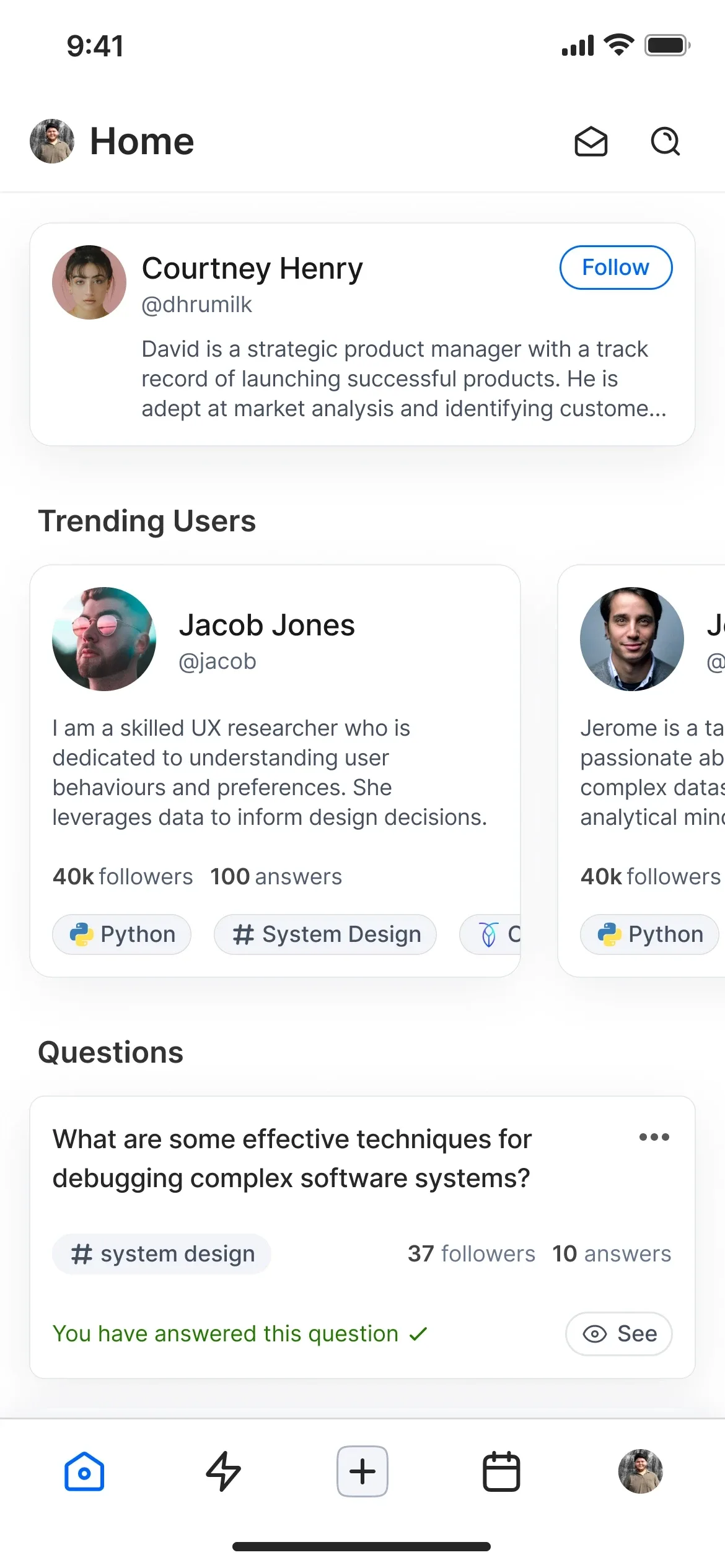
The feed is tuned by topic, not by follower count. A new member sees something worth reading on day one.
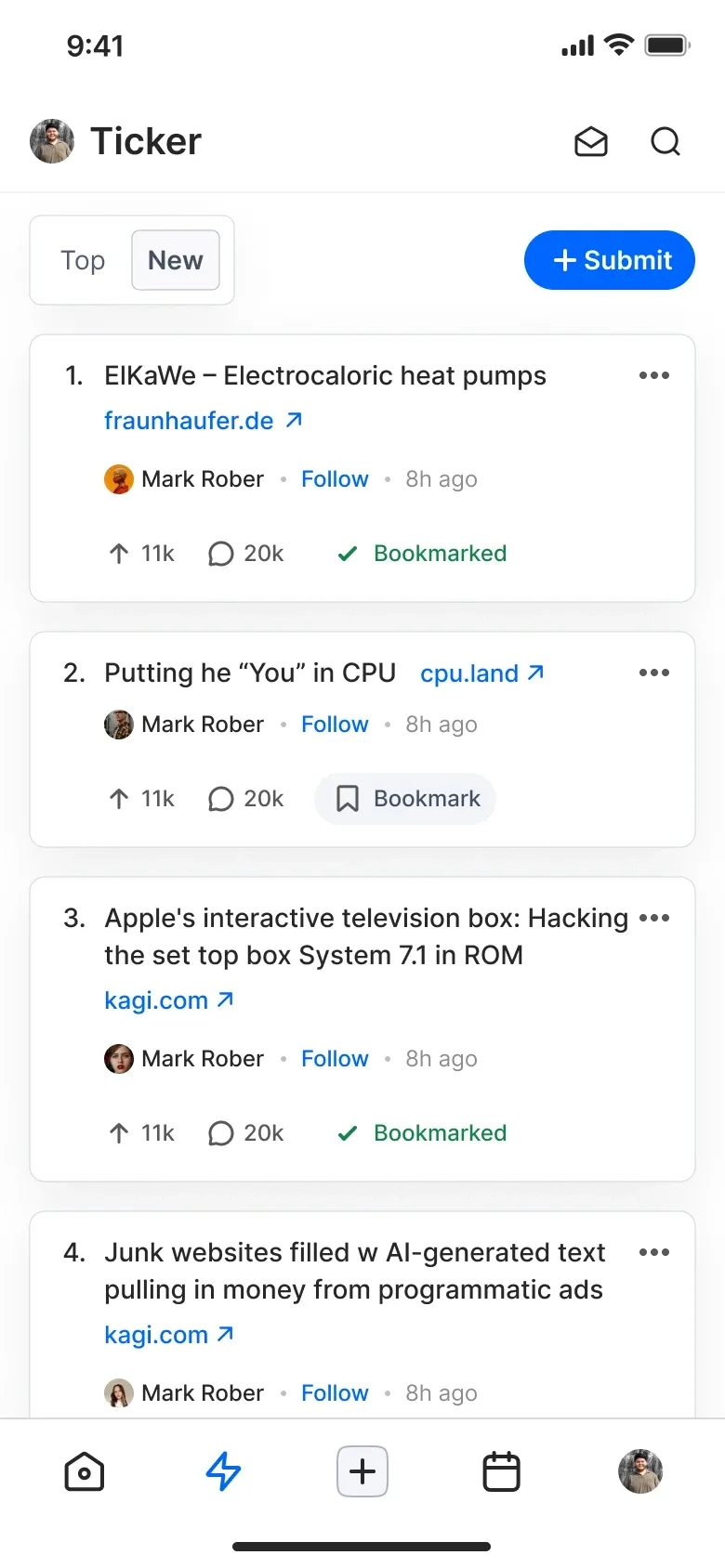
The ticker: short, submittable links. The lowest-effort way to contribute, so the room is never silent.
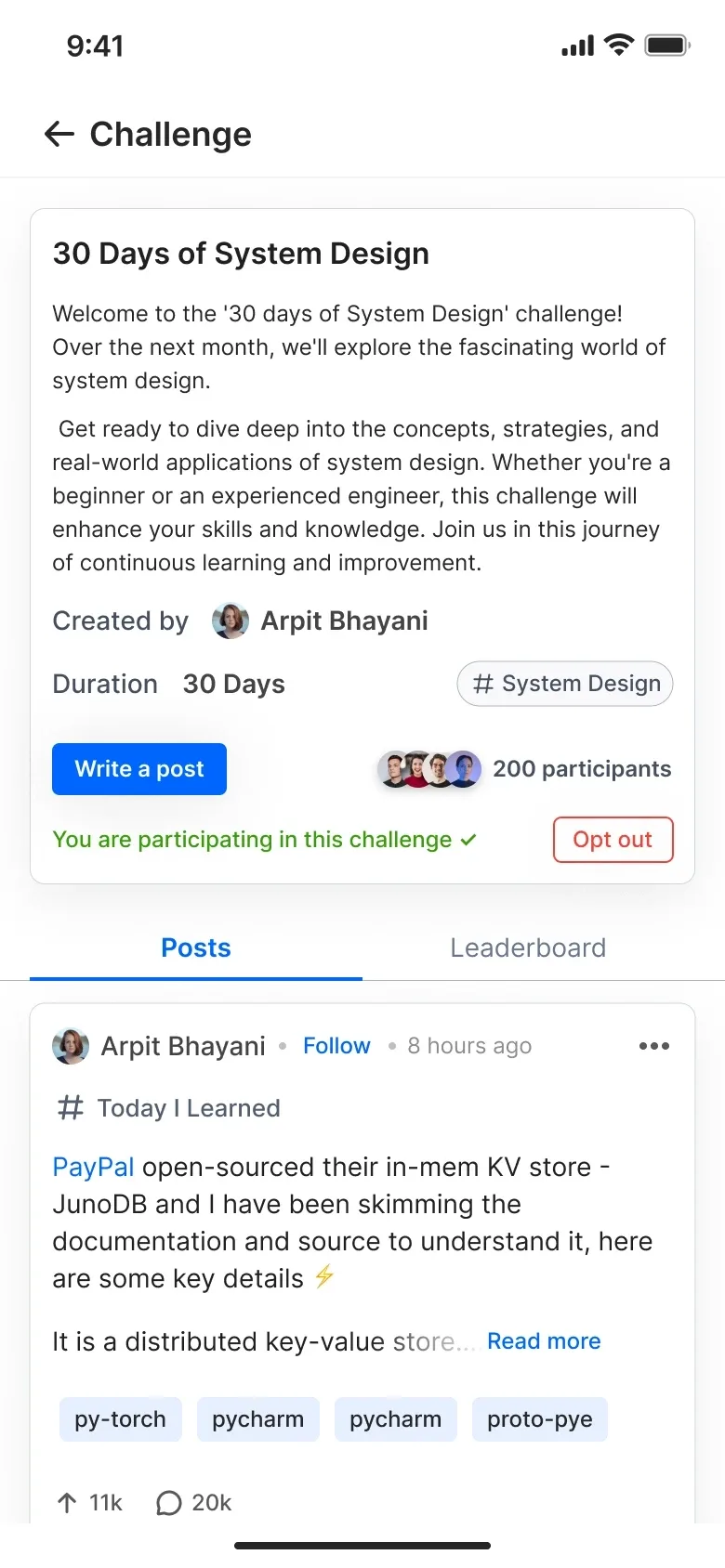
Challenges run 7, 14, 30 or 100 days. A reason to return that does not depend on anyone else posting.
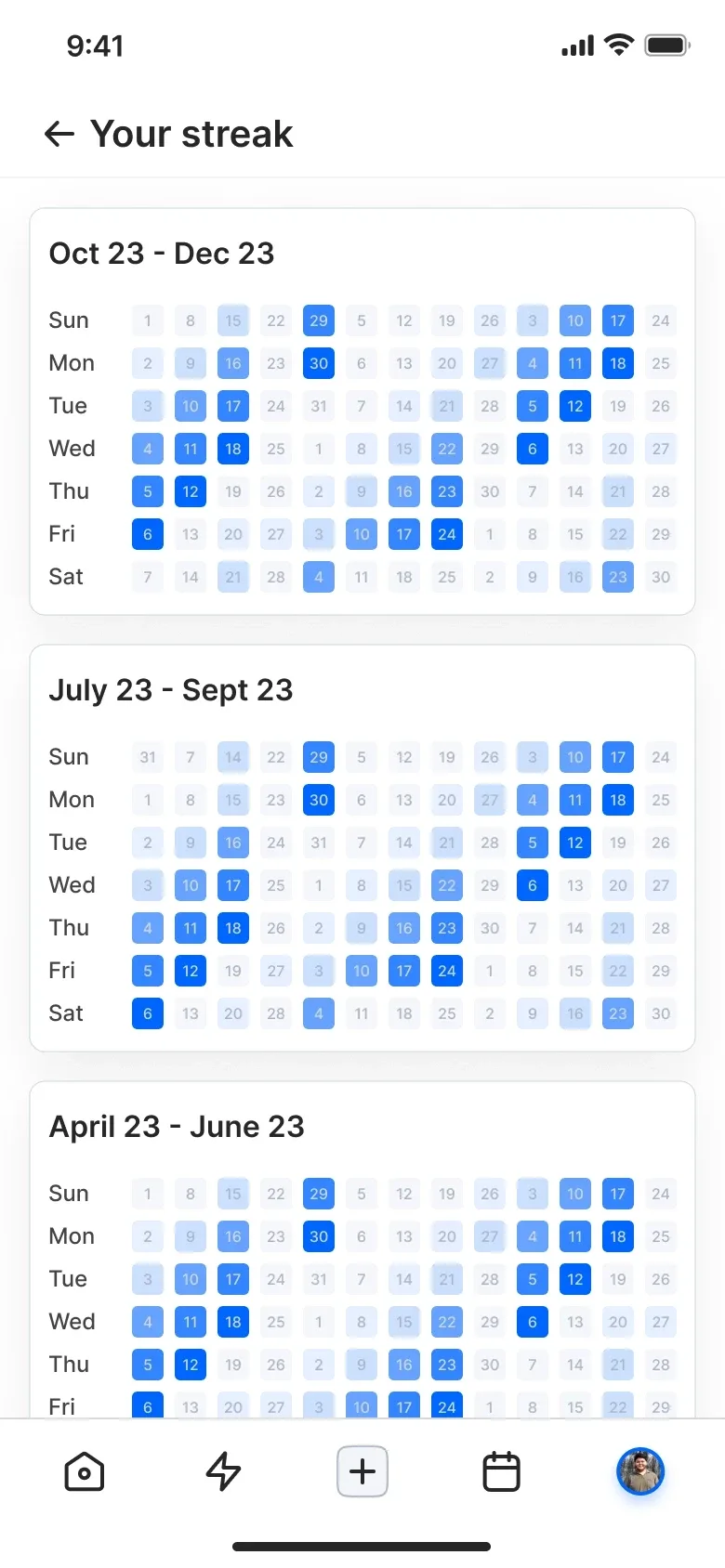
The activity graph. Borrowed from a place engineers already read it, which is the point.
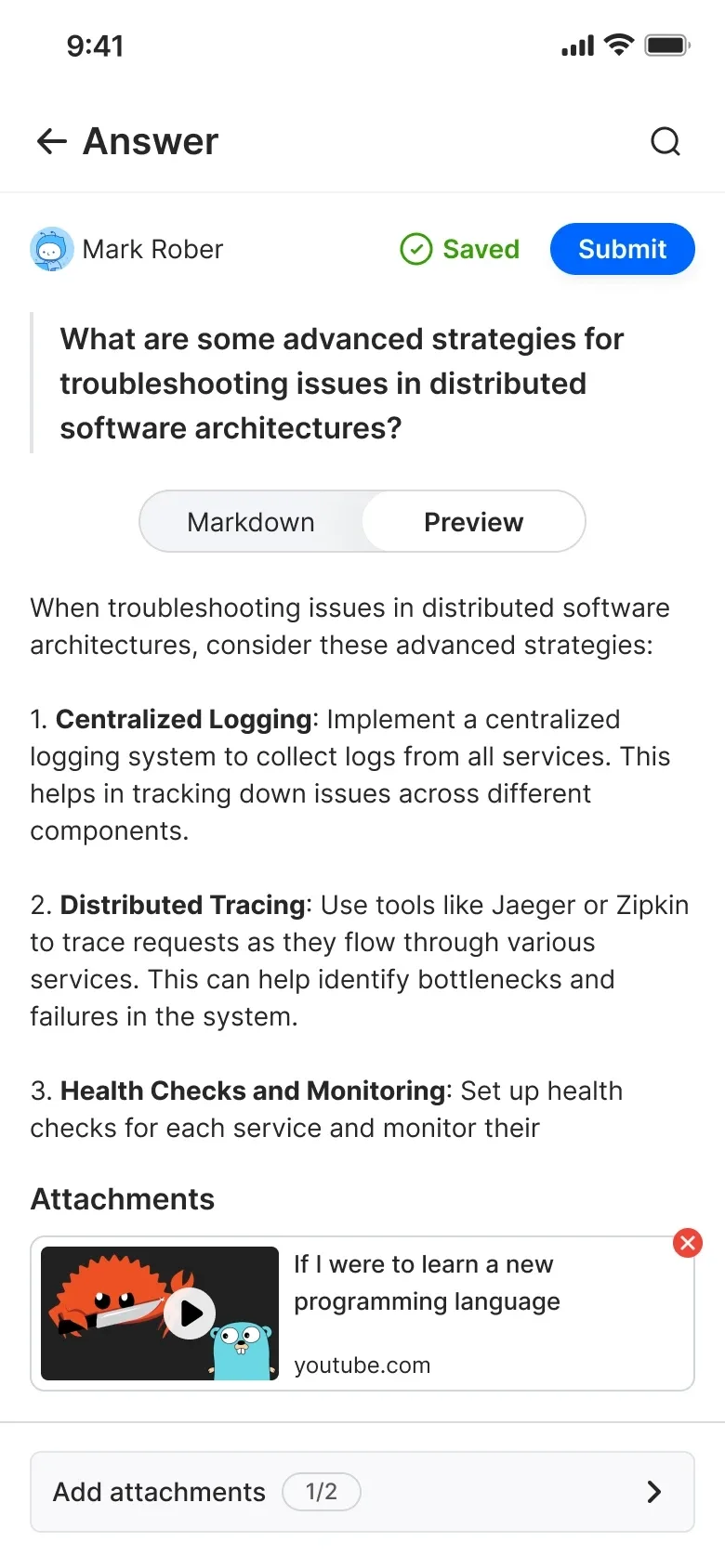
Answering in markdown with a live preview, because the audience writes code and expects code to survive the paste.
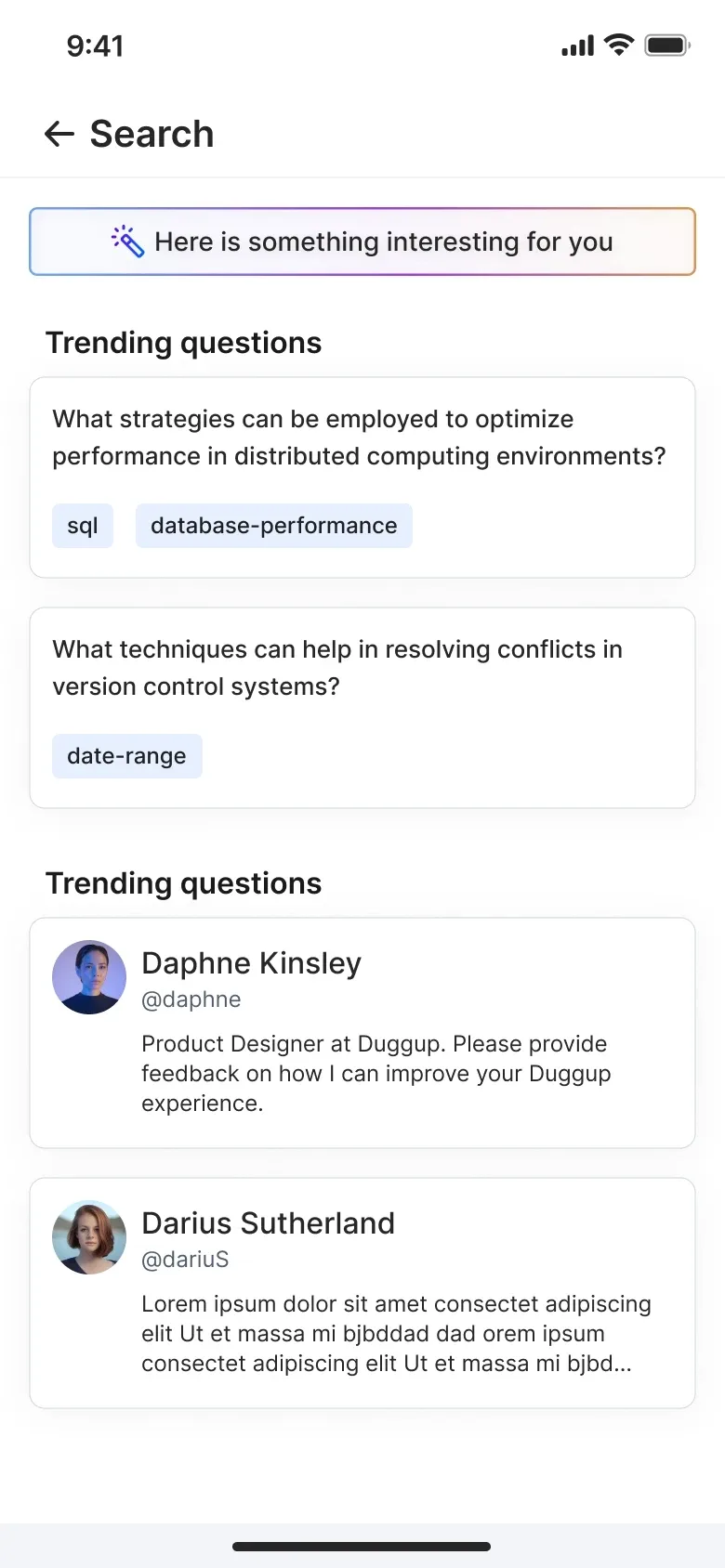
Surprise me: search that answers before you have typed, for when you do not know what you are looking for.
How it was researched
Secondary research rather than primary interviews on this one, and I would rather say that than imply a study I did not run. Competitor analysis across Quora, Hacker News and Stack Overflow, plus technical community forums on Reddit and specialist blogs, to surface the professional pain points that kept recurring: information overload, career stagnation, fragmented learning, and the isolation that comes with remote work.
What it was measured on
The public outcome I can substantiate is 2,000+ people in the first week. I am not adding a retention number here because the project material available to me does not include one I can publish.